Showing posts with label sewing. Show all posts

Wednesday, August 15, 2012

Finished Skirt Project: New Look 6190 View C


Yesterday I finally finished sewing my first garment after a week a hard work. I used View C from the New Look 6190 pattern.
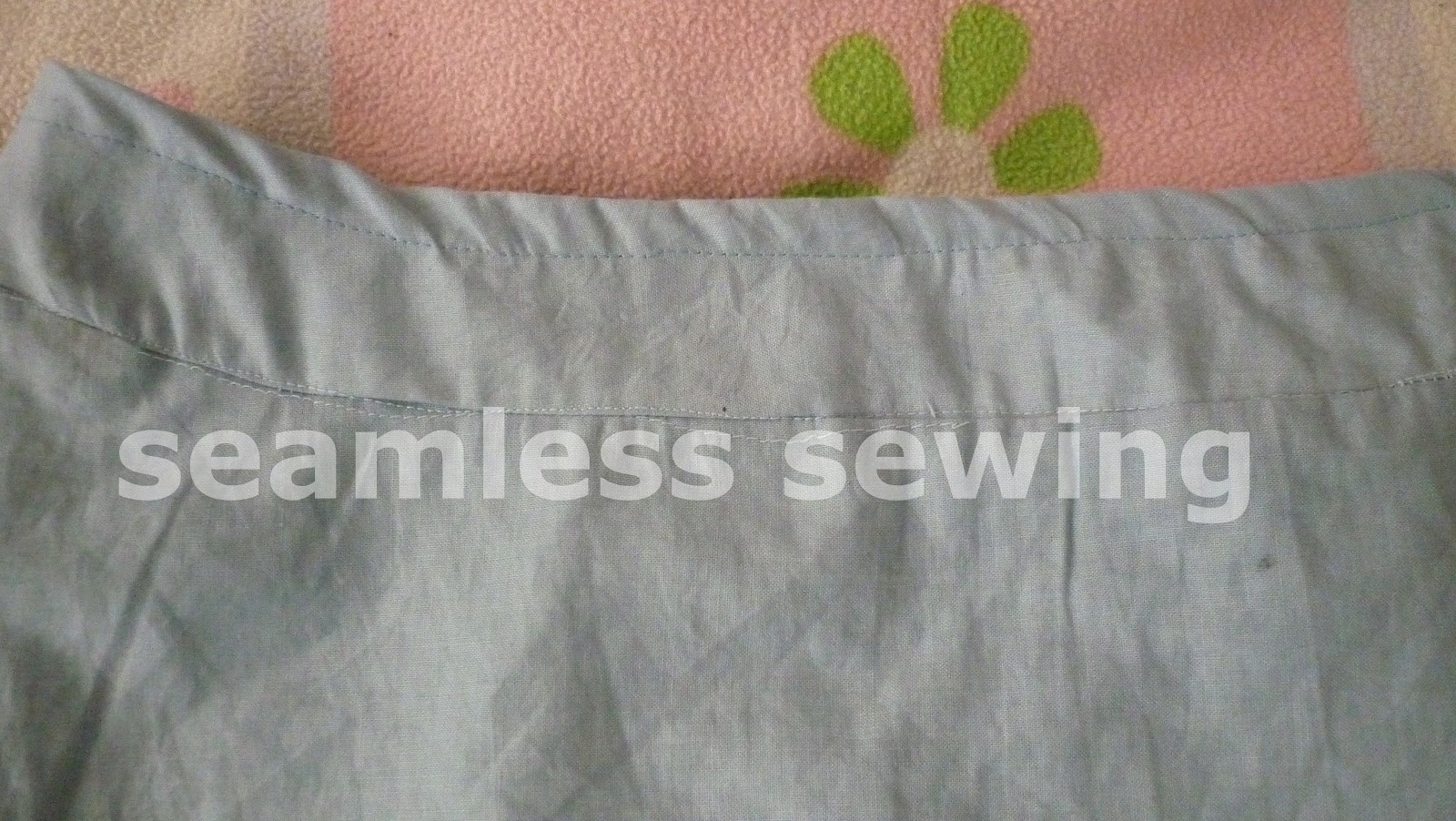
I found that the pattern was pretty easy to understand minus the three sections that explained how to apply the yoke/waistband. Therefore I turned to YouTube for some help.

How to Attach the Yoke to the Skirt
http://www.youtube.com/watch?v=mv3nVTFwt4k
How to Understitch
http://www.youtube.com/watch?v=b8WM4yjqawU
How to Stitch in the Ditch
http://www.youtube.com/watch?v=x1DXulZK_hQ
How to Sew a Basic Seam
http://www.youtube.com/watch?v=f-jIFZD3mxQ
How to Layer a Seam
http://www.youtube.com/watch?v=d3aom5R3rtY


While creating the skirt not only did I how a lot of trouble sewing the waistband, I also could not properly attach the zipper.


All in all I am very proud of myself for sewing a wearable garment. By no means is it perfect, some parts are even a little bit sloppy. However it came out pretty good for being the first garment I have ever sewed. I also learned a lot, so hopeful next time when I decide to created something with a pattern I wouldn't have as much problems. 


p.s I still have to press the skirt which is way it looks really wrinkly.  

How to Organize Your Craft Room


Everyone wants a sewing/craft room that looks like it was put together by a team from IKEA. Unfortunately this is not a reality for the majority of us. Instead we are confined to small, cluttered spaces, which seem to never be organized no matter for hard we try. Just take a look that my sewing area.


I did straighten it up a bit just so that I would not look like a slob.

To help you organize your sewing place here are some helpful tricks.  

Thread:
Storing thread in a large container may seem like a good idea, however after a while strands of thread tangle together. A better way to organize them is to use a lipstick organizer. That way each thread gets its own section, limiting the tangling problem. You can also make your own using this video.


Bobbins:
Bobbins are a lot like thread, in the sense that they get tangled with other things. To solve this problem try storing them in pill boxes. 


Patterns:
Once you open a package for a pattern, there is no going back. You can never fold it neatly enough to get it back into the package it came in. Therefore I like to put mine in paper bags, which I label and store in a large plastic container.


Pins:
A safe and cute way to store a large collection of pins is to place them in mason jars. You can also storage other things in them like zippers, elastic, measuring tape, and marking tools. To jazz it up you can also tie ribbon, or lace around the base.


Fabric:
Fabric can be quit challenging to store. One solution is to cut large rectangular pieces of cardboard and wrap your fabric around; similar to how it would look like in a fabric store. You can also try filing it in a filing cabinet, shown here. Or you can just neatly fold it and place in on a bookcase.
*Some of these photos do not belong to me* 


Monday, August 13, 2012

Five Must Haves for your Sewing Box


Before you start sewing, there are a couple of things you will need besides a needle and thread. Instead of doing a really basic list, I have decided to put together a list of things that are a little unconventional. The five things on this list you may have either forgotten to buy or not realize how important it is.


  1. Fabric Scissors: For the longest time I used regular cutting scissors to cut fabric. It wasn't until last weekend that I brought a pair. Now I realize how important they are. Compared to using regular scissors they don't cause your fabric to fray as must, which can be very stressful (take it for someone who knows.) I would suggest spreading the extra money to buy a really good pair. Fortunately I found mine at a dollar store for only $1.50. 
  2. Fabric Markers or Chalk: You can buy any type of marking tool.
  3. Seam Ripper: Before I had a seam ripper I used scissors to rip out seams, which was a bad idea sine it often ripped the fabric. Using a seam ripper is a lot easier and safer. Especially being a beginner sewer, since you will probably to taking out a lot of bad seams.
  4. Sewing Pins: The great thing about pins is the fact that you can great a lot for so little. 
  5. Measuring Tape: Very, Very, Very important if you want to make your own garments that will fit you in the end. I would suggest buying one that is a least 60 inches. However since my measuring tape is only 24 inches (61 cm) I often use a shoe lace, and then I measure that will a meter stick. 

LinkWithin

Related Posts Plugin for WordPress, Blogger...